You're Not a Bad Person for Wanting Money
Wanting money doesn't make you a bad person. It means you know how the world works. Why I stopped saying "I don't care about money", the Standard vs Amazing-F*cking-Experience test, and why Income First cares about effort too.

I want to make an obscene amount of money.
There. I said it. And no, wanting a lot of money doesn't make you a bad person. It makes you someone who knows how the world works and knows you only live once.
Housing, healthcare, school for the kids, a trip with your family that isn't the cheapest possible version of the trip. All of it costs money, on a regular basis, whether we like it or not. Our ability to get the things we want is limited by our ability to make money. That's not greed. That's math.
So why does it feel so ugly to say it out loud?
I spent decades saying "I don't care about money"
For most of my life I thought pursuing money was kind of a sin. "I don't care about money," I kept saying. I really believed that if I was a good guy with good intentions and did things right, money would follow.
It didn't. At least not the way I'd have liked.
And here's the twist. Because I "didn't care", I never controlled how money flowed. It was never enough. If I wanted income, I had to work, and hard, and my options were always limited by it. I ran the hamster wheel for so long that my legs got tired.
Robert Kiyosaki put it something like this: you either control money, or money controls you. When I read that I was like... "oh wow, that's me."
That was my midlife crisis. Yep, I'm a middle-aged man. I kind of like how that sounds. I had built businesses, I had a good network, I'd traveled, I had control of my time. And I was still controlled by money, and scared of dying without crossing things off the list.
Ten minutes in a Starbucks
On December 5, 2023 I sat in a Starbucks with my Dingbats notebook and wrote a manifesto. Yes, a manifesto. I'm a nerd, I'd read the Agile Manifesto and I guess it stuck.
It took about ten minutes. Most of it had been in my head for years and I'd been keeping it there on purpose. One of the lines, word for word from the notebook: "I understand that by avoiding money I become a slave of it. Instead, I will face it directly and master the art of becoming financially wealthy."
Another one was about loving my family and being present in every minute. Both lines are on the same page. That matters, and I'll come back to it.
There's a short version of this on my about page. That day I decided to master the art of making money. Everything at the Lab, including Income First, came out of that decision.
Say it out loud and watch what you feel
Try it. Right now. Say that you want to make so much money you could fill a pool with it and swim in it.
Feels ugly, right? Uncomfortable. Like you just turned into one of those guys who cares nothing about the world, follows deals like a shark follows blood and laughs at everybody else.
Now take that picture and throw it in the trash. It's not a real person. It's a cartoon most of us grew up with, and it's quietly deciding how much you're allowed to charge.
That picture is exactly what keeps a lot of good, generous, capable people broke. They got into business to help, to do good work, and putting money first feels like betraying that. So they bury it under a mission statement and a lot of motion. And a business that's embarrassed about making money has a funny way of granting that wish.
And please, don't hide behind "I don't really want that much." Maybe you don't. But be honest with yourself about whether that's a preference or a story. It's way easier to convince yourself you don't want something than to go and get it. Why not the Lambo? Have you seen the orange Revuelto? Really, why not?
Standard, Deluxe, or the Amazing-F*cking-Experience
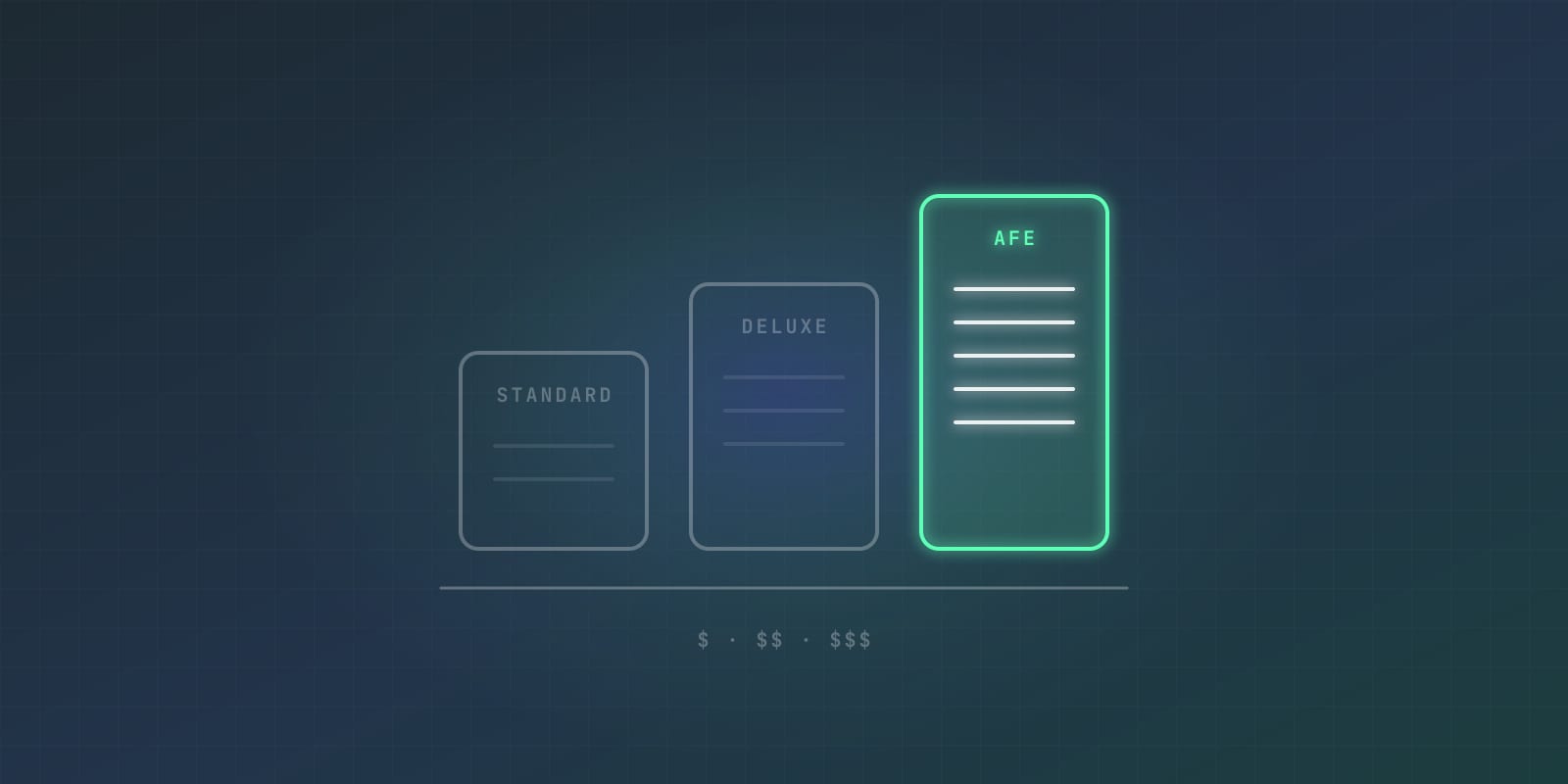
Picture buying a trip. Three packages: Standard, Deluxe, and the Amazing-F*cking-Experience.
Which one do you pick?
Exactly. We'd all pick the AFE package, if we could afford it.
So when someone says "I always get the Standard, I don't really care about the extras"... isn't that a polite way of saying "I get the Standard because I can't afford the other one, which by the way I'd love to give my family"?
Life works the same way. The Standard is what you get by default if you work hard and do things "right". The other one you only get if you stop pretending and start making enough money to choose. Not to brag. To choose.
And there's nothing wrong with the Standard if you actually chose it. The problem is pretending you chose it when you didn't.
Money is a tool, a very powerful one
Money is a resource. What you do with it is up to you. And the more of it you have, the more options it turns into.
Make the money first, then go change the world, if that's what you want. Fund the cause. Fix the thing that's broken in your corner of it. Money doesn't compete with any of that. It's how you afford it.
Once the business actually brings money home, you can:
- Pull a huge amount of stress out of your life, and think clearer because of it.
- Take time off to think about the business, instead of firefighting from the moment you wake up.
- Hire great people.
- Say no to the client who pays fine and drains you.
A broke business can't fund a mission. It closes, and every customer who depended on it is left without you. I'd go further: making money is a responsibility. If your business makes a lot, it's usually because it delivers a lot.
Our grandparents knew this. They were bakers, bankers, lawyers. They had something people actually paid for, and they grew that. Nobody was embarrassed about the bakery making money.
The money that counts is the money that comes home
When I say money, I mean a specific kind. Not revenue. Not a valuation. Not a number you say at a dinner.
Income: money you take home and spend on your actual life. The mortgage paid without the knot in your stomach. Revenue isn't profit, and profit isn't income. A business can post a big top line and hand the person who built it almost nothing. I've seen it plenty.
So wanting money, the way I mean it, is wanting that. Money home.
But not at any cost: Income First cares about effort too
Here's where I lose the people who wanted me to say "just make the money".
Remember the two lines on that notebook page. Master money. Be present with my family. If the money costs you every evening, your health and the people you're doing it for, you didn't win. You bought a bigger, more expensive job.
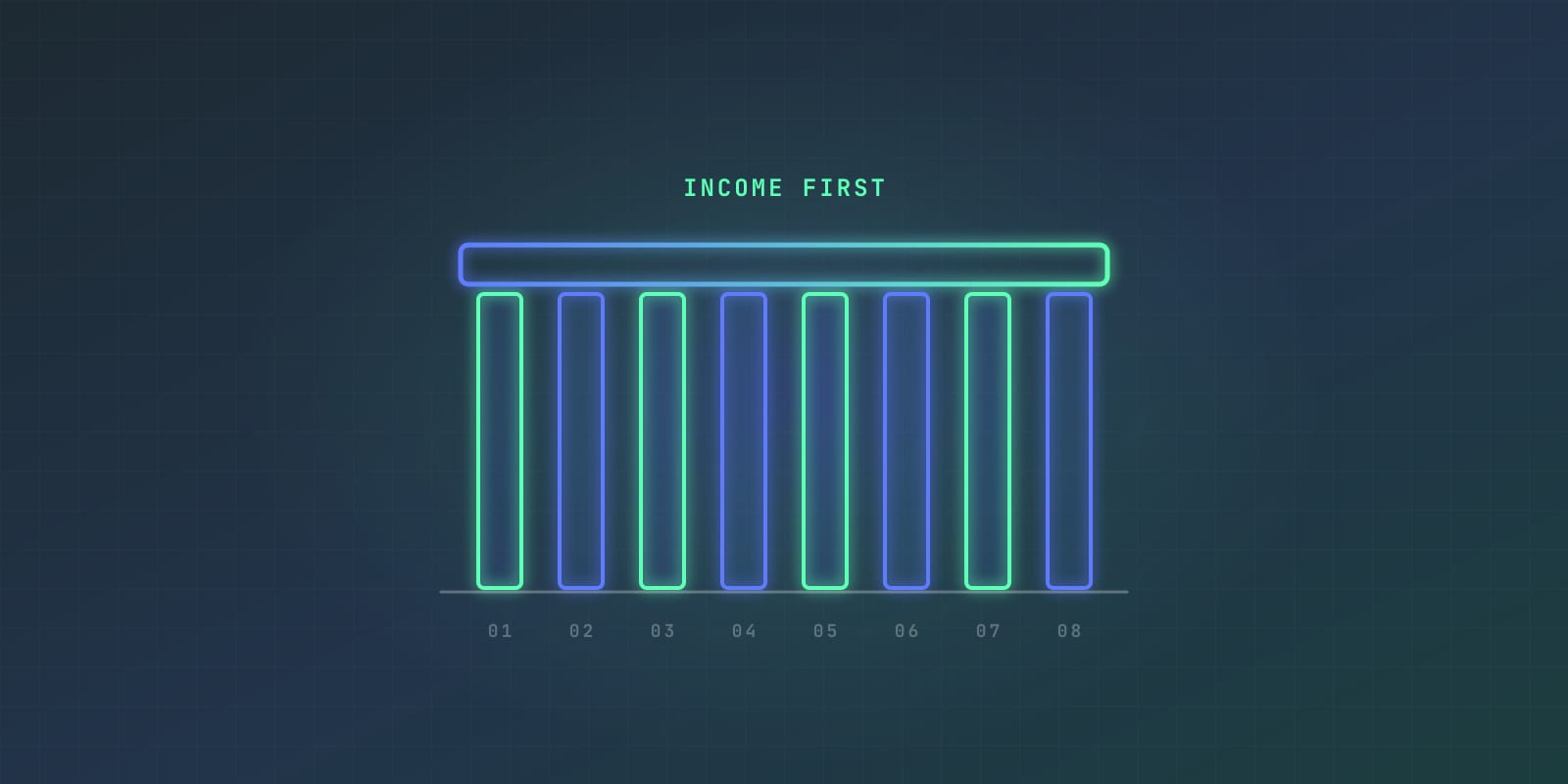
That's why Income First has two numbers, not one. Income over effort. A 10 on income with a 10 on effort is an efficiency of 1. You're rich and you're trapped. Building a business isn't about maxing income. It's about maxing efficiency.
Effort is also one of the eight pillars, and it's there for a reason. I want the obscene amount of money. I also want the Friday off and the walk with my family where my head is actually on the walk.
Both. Not one or the other.
Write your number tonight
Three things, and they take less than an hour.
- Say your number out loud. The real one, the one you'd want if nobody was listening. Notice what you feel when you say it.
- Write it down as an income target: money home per year. Then score the effort you're willing to give, 0 to 10. That's the first line of the one-page business plan.
- Give yourself ten minutes and write your own manifesto. Nobody has to see it. Sharing mine still doesn't come easily.
If you write the number and have no idea how your business gets you there, book a 1:1 with me. Bring that one problem. You'll leave with a way forward.
Take what resonates with you and try it—or not!